Michigan State University researchers are helping engineer the playing surfaces for soccer's biggest tournament
Read more about the Michigan State Turfgrass program here.
When John "Trey" Rogers III wakes up in the middle of the night, it's often because he's thinking about soccer fields. Not just any fields — the ones that will host the FIFA World Cup 2026.
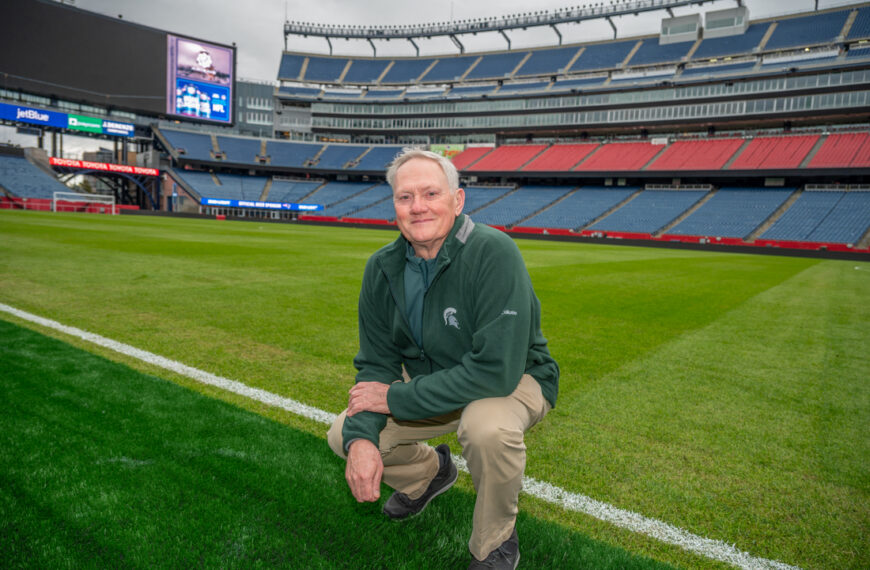
Trey Rogers at Gillette Stadium outside of Boston — one of the temporary field venues prepared for the FIFA World Cup 2026. Photo by Derrick L. Turner.
For the past five years, the Michigan State University professor of turfgrass research has been consumed by a problem few people ever think about but one that will be tested on the world's biggest stage. How do you make turfgrass — real, living grass carefully grown and managed for elite play — perform consistently in every stadium across vastly different climates?
"Consistency at the World Cup isn't accidental — it's engineered from the ground up," Rogers says. "To make sure 16 different stadiums in three different climates play the same, we had to control everything from the exact mix of grasses, how the surface is built and reinforced, and the turf and soil specifications so the field is ready to perform and recover after every match."
For Rogers, the challenge is both new and familiar.
A challenge decades in the making
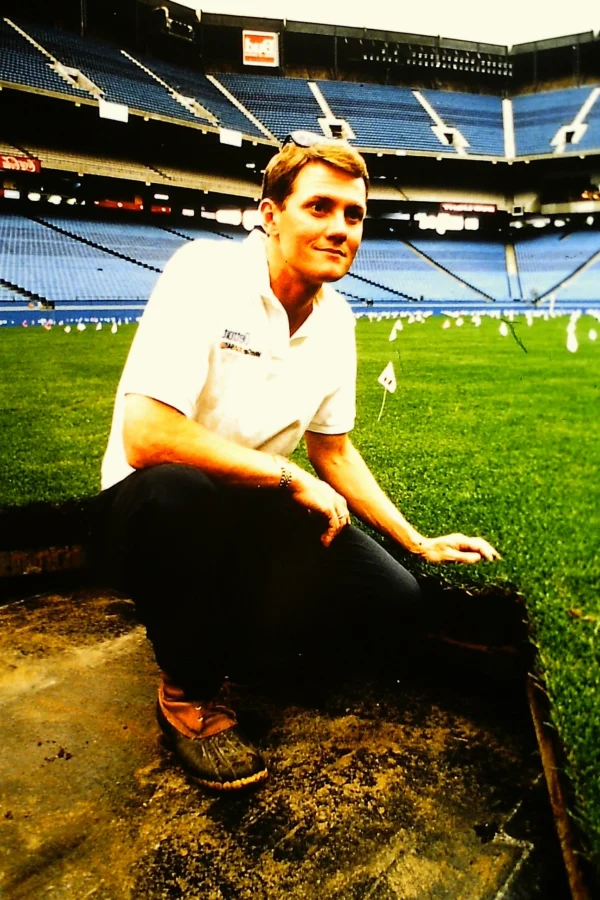
Rogers inspecting the experimental indoor turfgrass field at the Pontiac Silverdome in the early 1990s — the pioneering work that set the stage for his role in the 2026 World Cup three decades later. Photo courtesy of the College of Agriculture and Natural Resources.
More than 30 years ago, Rogers faced a similar question while helping prepare the indoor field at the Pontiac Silverdome for the 1994 World Cup, a venue with no natural sunlight and no precedent for growing grass indoors.
"We were trying things that hadn't been tried before," Rogers says.
The work required creativity, experimentation and a willingness to fail — qualities that would come to define Rogers' career and Michigan State's turfgrass program, widely regarded as a global leader in the field.
It also sparked something unexpected. An undergraduate student working on that project, John Sorochan, was inspired by the challenge. Years later, after building his own career in turfgrass science at the University of Tennessee, Sorochan would receive a call from FIFA about the 2026 World Cup — and his next call was to Rogers.
More than three decades after creating the turf for the Silverdome, they were back at it again.
One tournament, 16 stadiums
The FIFA World Cup 2026 will be the largest in history, spanning 16 stadiums across the United States, Canada and Mexico. Some are open-air venues exposed to heat, rain and shifting weather. Others are domed or rely on artificial turf that must be temporarily converted to natural grass.
Turfgrass refers to real, living grass — not artificial turf — that is carefully selected, grown and managed to create high-performance playing surfaces. For events like the FIFA World Cup, turfgrass is engineered for consistency, durability and recovery, ensuring that fields in different stadiums and climates provide the same ball movement, footing and performance of play at the highest level of the game.
The distances alone are staggering, with sod traveling hundreds, sometimes thousands, of miles from specialized farms to stadiums on tight timelines.
"We're breaking new ground. Nothing at this scale has ever been attempted."
— Trey Rogers, Professor of Turfgrass Research
And yet, to the players, it's not those details that matter, but the final product.
"The goal is consistency," Rogers says. "Every field has to feel the same to these world-class athletes."
That means the surface must hold up under elite play and meet strict performance standards, whether it's the first match of the tournament or the final.
"We're breaking new ground," Rogers says. "Nothing at this scale has ever been attempted."

Reunited on turfgrass: MSU's Trey Rogers and his former student, University of Tennessee's John Sorochan, at the FIFA Field Day, collaborating again after three decades. Photo courtesy of University of Tennessee.
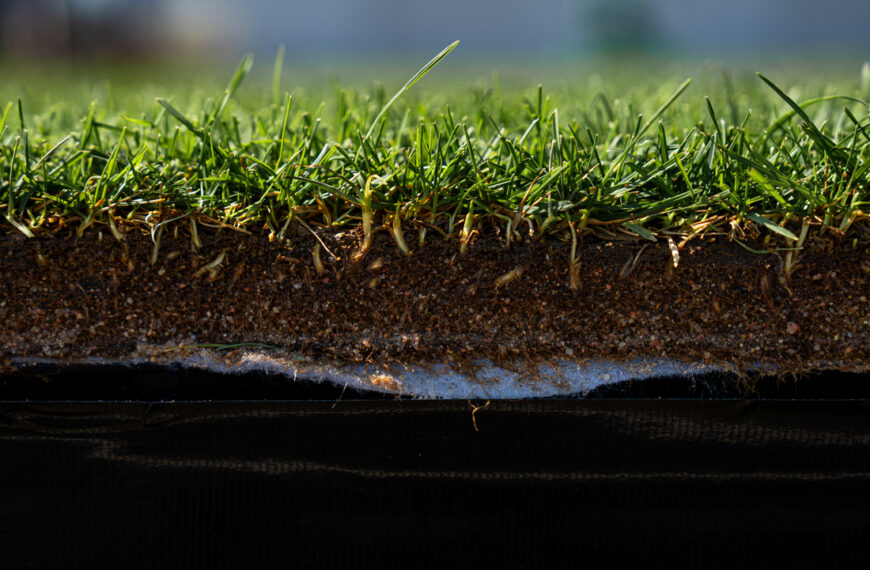
Two inches of grass. Eighteen inches of engineering underneath. Photo by nick schrader
Inside the research
Engineering performance
Rogers is quick to point out that MSU is not growing every field used in the tournament but helping design how those fields are grown.
At MSU, researchers developed the specific mixture, or recipe, of grasses that would be planted at sod farms across North America, tailored to three different climates. They also helped determine how to grow, harvest and deliver that turf on an exact timeline so it would be ready for play.
"The turfgrass was researched here at Michigan State," Rogers says. "We helped develop the exact formula so it would produce a strong turf extremely quickly and be ready at a very specific time."
That work is grounded in evidence-based research — testing how surfaces respond to impact, how the ball behaves and how players interact with the field.
The goal is not just to grow grass, but to engineer performance.
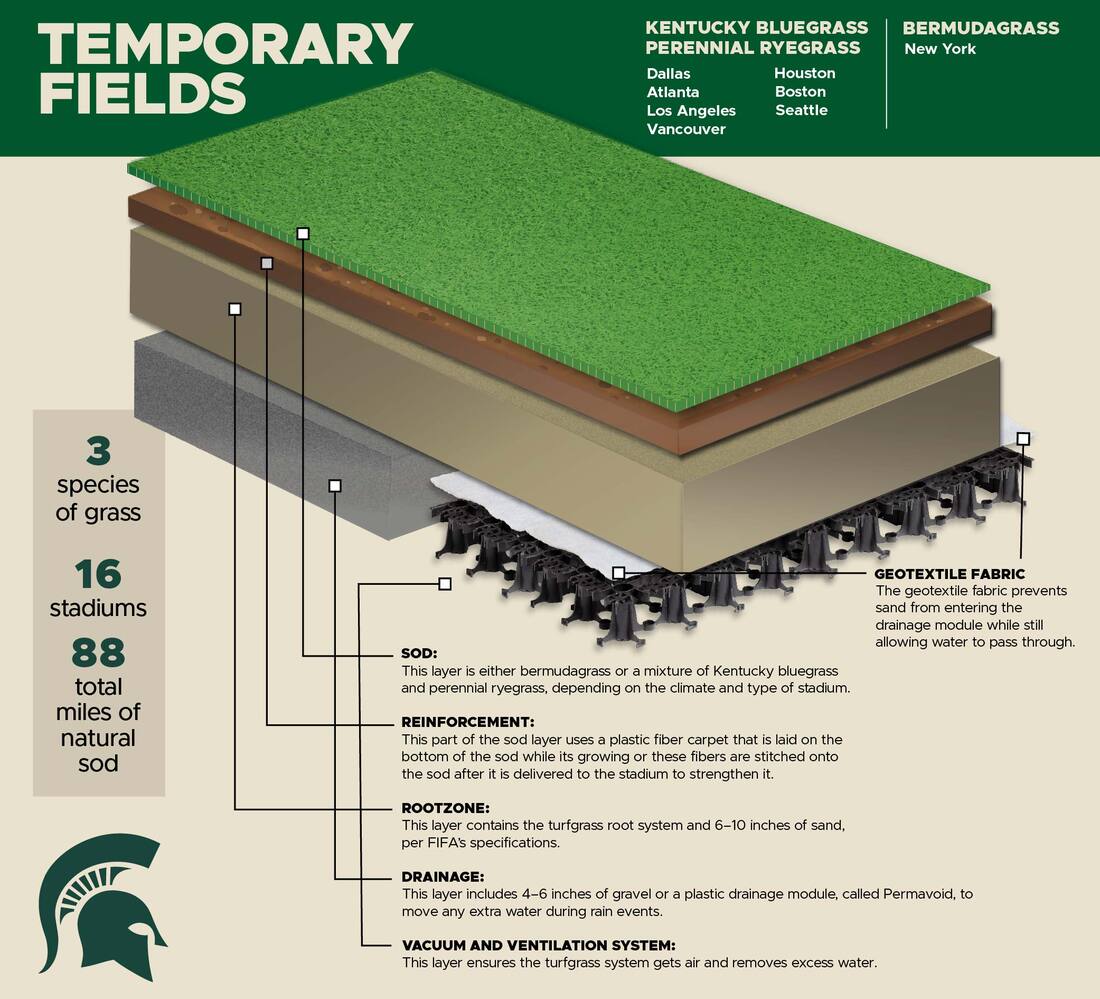
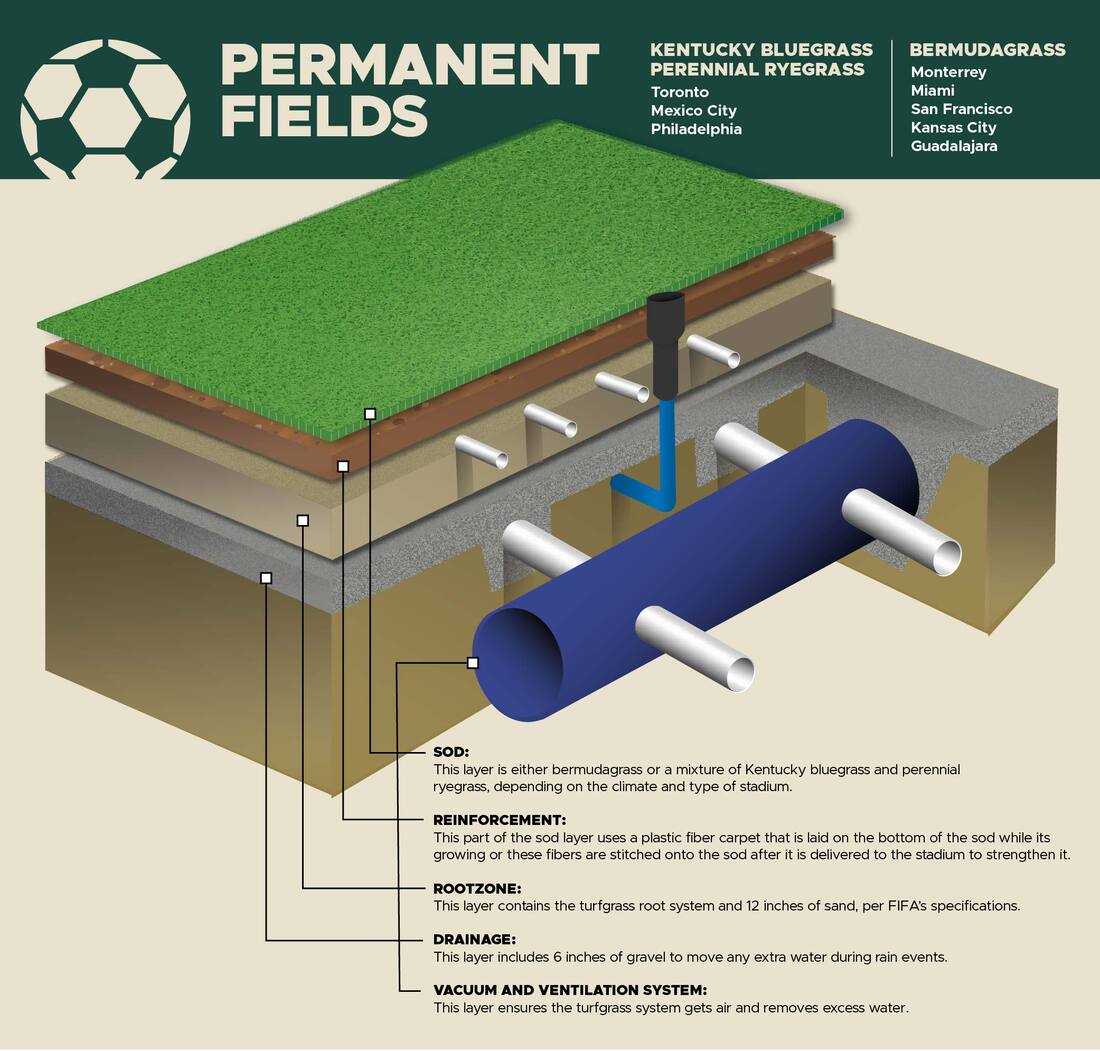
The MSU turfgrass system used in the permanent & temporary stadium fields. Graphic by Howard Davy.
Sod on plastic, ready the day it goes down
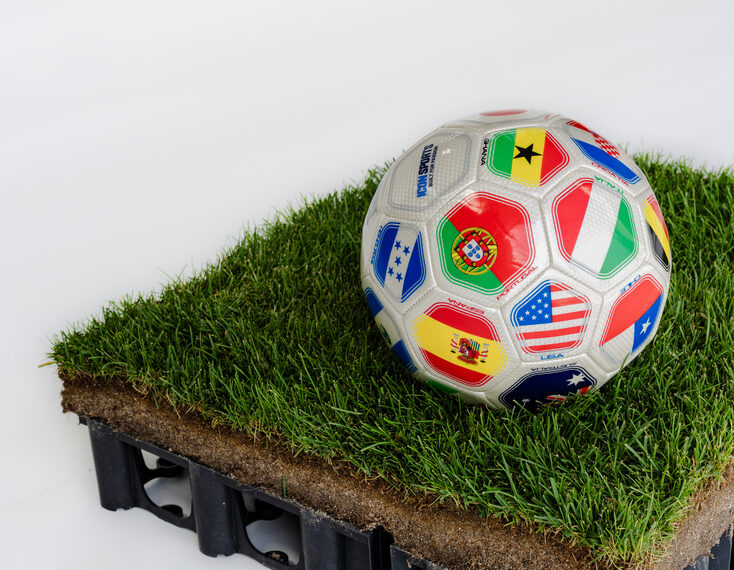
MSU-developed turfgrass grown using the sod-on-plastic method, engineered for rapid establishment and immediate playability on the world stage. Photo courtesy of Spartan Magazine.
Sod grown on farms across the country, including operations in New Jersey, Colorado, North Carolina and Washington, is harvested, rolled and transported by truck, often overnight, before being installed in just a matter of days.
Because much of it is grown using a system known as "sod on plastic," the grass arrives with its root structure intact, allowing it to be laid down and used almost immediately.
"The biggest advantage is that the plant is fully intact," Rogers says. "It makes it easier to transport and basically playable the day it goes down."
For stadium crews, that work is both technical and relentless.
"It gives us a research-educated baseline to start from," says Ryan Bjorn, field superintendent at Gillette Stadium outside of Boston. "And then we tailor everything to our specific conditions."
From there, the work becomes constant — adjusting for weather, managing wear and tear and preparing for everything from matches to ceremonies.
"There's so much that goes on behind the scenes that people have no idea about," Bjorn says.
How MSU's turfgrass program is reshaping the playing surfaces athletes train and compete on — at every level of the game.
16 Spartan-engineered fields · Canada · USA · Mexico. Graphic by Molly KillingBeck.
Explore the host venues
Where the grass grows
Sod traveling hundreds — sometimes thousands — of miles from specialized farms in New Jersey, Colorado, North Carolina and Washington will land in 16 stadiums across three countries. Below, the system and grass mixture the research team prescribed for each:
 Canada
Estadio Azteca Mexico City·  Mexico→
New York New Jersey Stadium★·  USA→
USA→
San Francisco Bay Area Stadium· USA→
★ · championship game
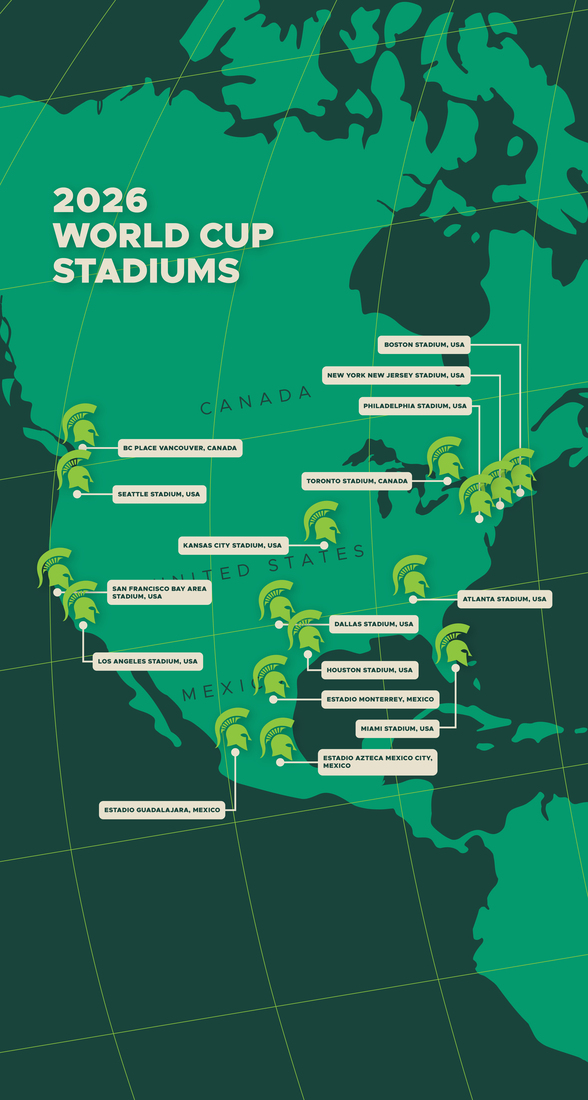
Source: University of Tennessee and Michigan State University.
Under a microscope
If the work is invisible, the stakes are not. The World Cup is expected to draw billions of viewers, with high-definition broadcasts capturing every detail of the field beneath the players' feet.
"The eyes of the world will be on this," Rogers says. "Television has never been this sharp, so we're going to be under a microscope."
For players, the expectation is simple: the best surface possible, every time.
"These are the best athletes in the world," Bjorn says. "They expect consistent, high-quality playing surfaces. We want the field to play exactly the same on match one as it does on match seven."
A lifetime of work — and what comes next
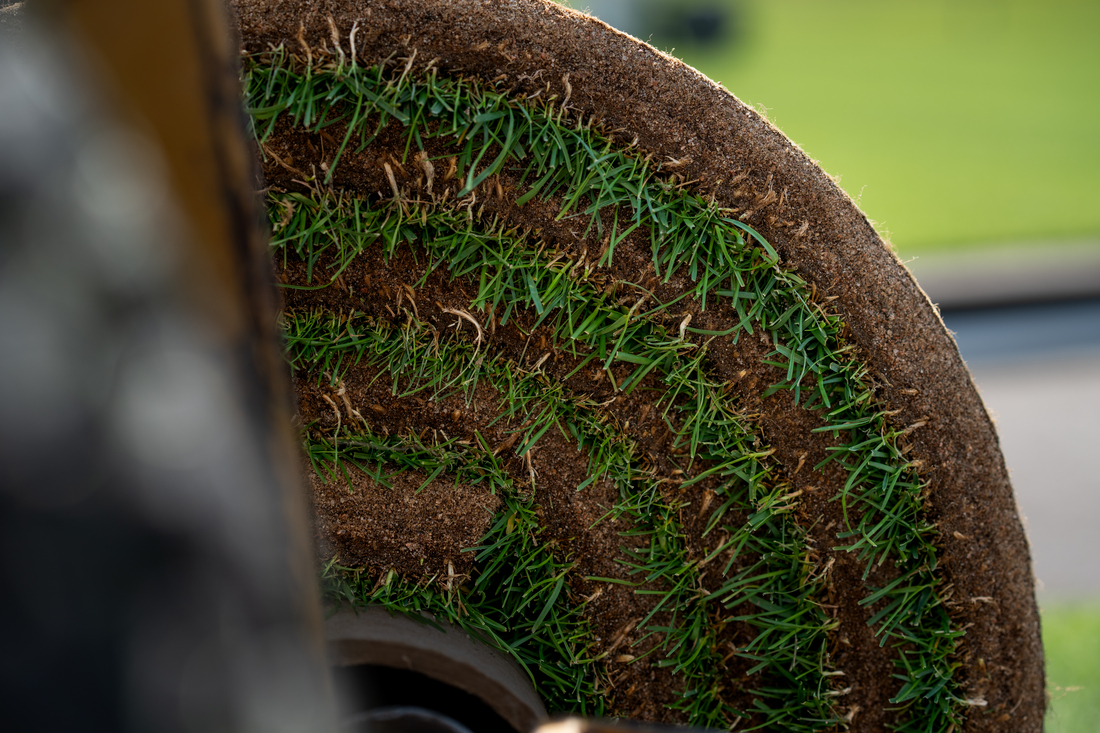
Rolls of MSU-developed turfgrass before installation, harvested at precisely the right moment and transported to the stadium ready to play from day one. Photo by Nick Schrader.
For Rogers, now more than three decades into his career, the World Cup 2026 represents both a culmination and a turning point.
"It's sometimes difficult to put into words the enormity of the project," he says. "It's been encompassing our lives for the last five years."
The innovations developed for the tournament — from grass mixtures to transport systems — could shape the future of sports venues, allowing stadiums to host natural grass temporarily and adapt to different events more easily.
"I think we'll see that legacy play out over the next few years," Rogers says.
Still, even as the science advances and the systems scale, the work remains deeply personal.
"If we do our job right, no one will notice the field at all."
— Trey Rogers
For five years, it has meant early mornings, late nights and the kind of quiet, relentless problem-solving that rarely makes headlines. It has meant carrying the weight of a global stage — knowing that the world will see the result, even if they never think about how it got there.
And in a few short weeks, when the first ball is kicked and the world is watching, Rogers will finally get his answer.
"If we do our job right," Rogers says, "no one will notice the field at all."