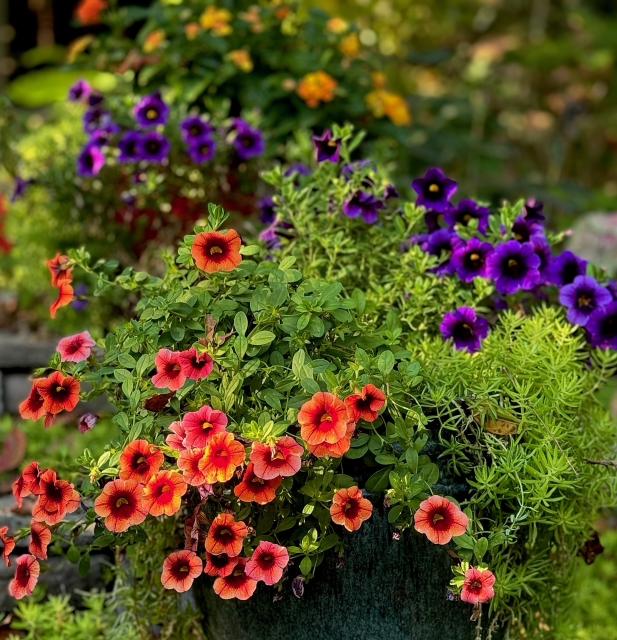
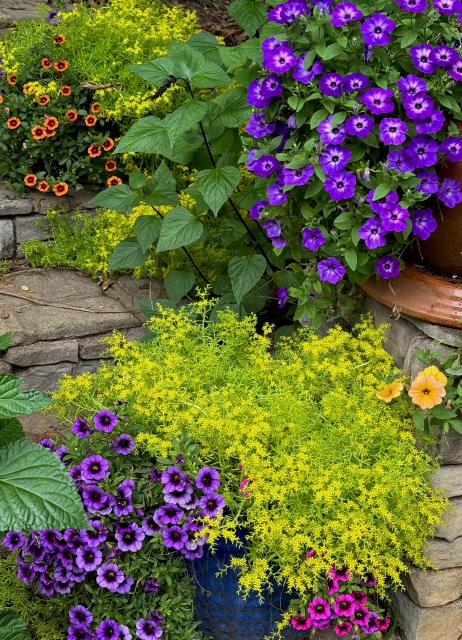
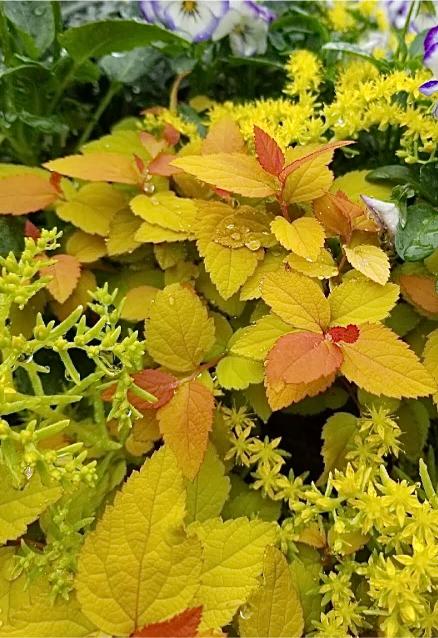
The National Garden Bureau has chosen 2026 to be the Year of the Sedum. It is always the year of the sedum at The Garden Guy’s house. As I pulled photos for this column, I was stunned by its beauty, and in this case, it is Lemon Coral sedum.
Make no mistake: Lemon Coral sedum is an award-winning plant from Mississippi State University to Penn State University where it garnered a Perfect Score All Season. It will sizzle in mixed containers, boxes, baskets and as a ground cover. It thrives in sun to part sun and in all soil types (other than those that take a pickaxe to break apart).
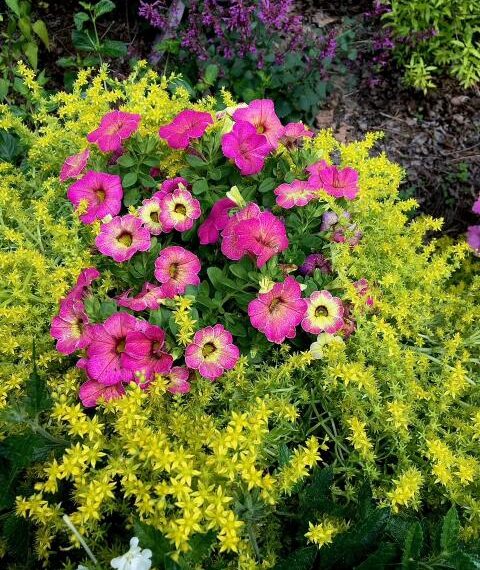
Earlier in the spring this container had only Lemon Coral sedum with foliage, but a Superbells Magic Pink Lemonade was planted in the center and looks like perfect partner.
Basic Types of Sedum
Classifying Sedum into basic types is a challenge that has stumped botanists since Linnaeus first specified the genus. Depending on who you ask, there may be over 700 species, or as few as 200 species, as different classes have been segmented off into new or sub-genus.
Whether you accept the narrow or broad definition of Sedum, three characteristics tend to be true of all Sedum plants:
- A similar growing environment. They prefer to be grown in full sun (tolerating partial shade), well-drained, and generally nutrient-poor soils.
- Thick, succulent, water-storing leaves.
- Clusters of star-shaped flowers that appear at the end
Their habits can be classified into roughly three forms:
- Upright Autumn Stonecrops – these varieties tend to be as tall as they are wide with an upright, clumping habit. Sedum spectabile is one of the most popular species, and Sedum ‘Autumn Joy’ is one of the most popular varieties. These types may also go by the name Hylotelephium.
- Compact Clumping Sedum – Intermediate between the Autumn Stonecrops and Groundcover varieties, Sedum in this class tend to be under 12” in height and have clumping habits that stay where you put them in the landscape. These varieties are excellent for lining the front of the garden border or tucking into rock gardens. Sedum kamtschaticum and Sedum sieboldii are two of the most well-known species in this class. Sedum ‘Bight Idea’ and ‘Pure Joy’ are two of the better-known cultivars.
- Groundcover Sedum – Low, spreading plants. These varieties spread through underground stolons and will create a carpet of succulent foliage. Popular varieties in this class include Sedum rupestre ‘Angelina’ and Sedum ‘Blue Spruce’.
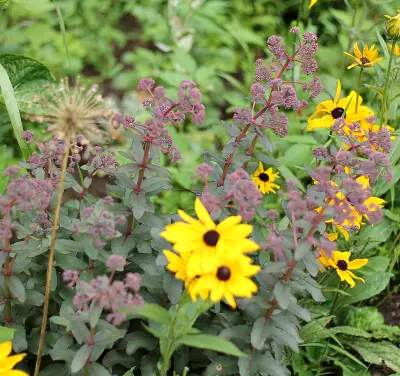
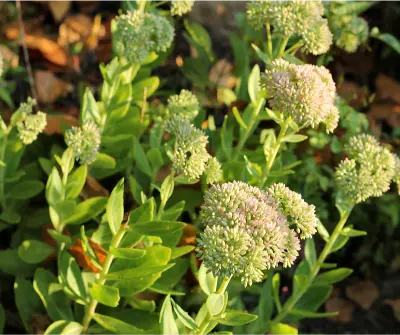
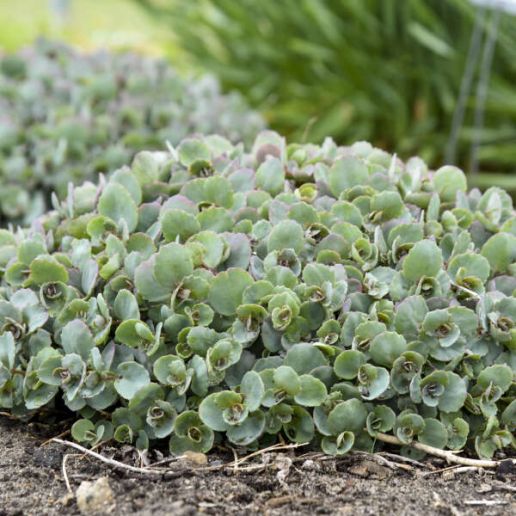
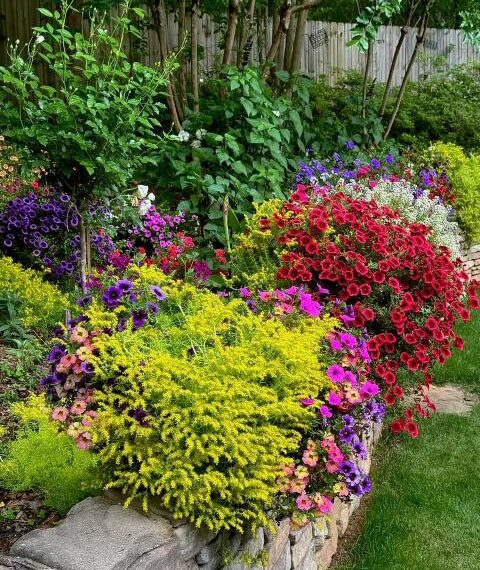
I quickly came up with 30 photos, which brought up a question in my mind: why isn't everyone using it, especially in their containers?
Botanically speaking, Lemon Coral is known as Sedum mexicanum, a clear indication of its native habitat. It is perennial in zones 7a-11b. In Georgia’s zone 8, it thrives 12 months of the year. There is never a time it is not an asset in a mixed container, no matter the other partners.
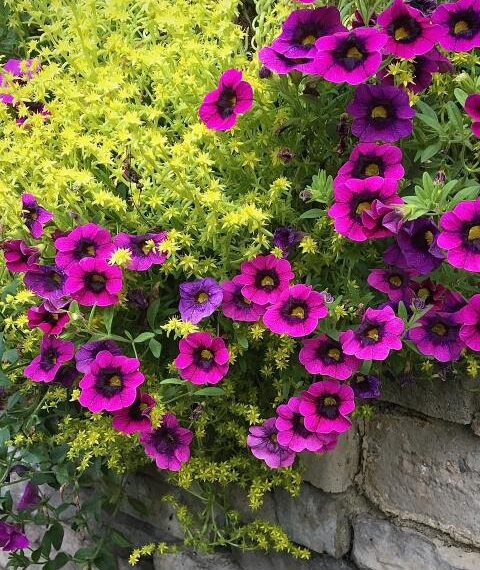
Lemon Coral sedum and Superbells Blackcurrant Punch calibrachoa make quite the partnership.
During the coldest months, it may look like a creeping lava flow of chartreuse. But in the spring months, the stems start to elongate and there are weeks of tiny yellow flowers growing in every direction. These flowers, though wild in their habit, look like a floral painting with every flower they are combined with.
They may get 3 to 10 inches in height and spread 10 to 14 inches. The bloom period began in March this year, as it often does, which shows its ability to dazzle with pansies. But I have good luck coaxing Superbells calibrachoas, Supertunia petunias and Superbena verbenas through the winter and you can’t beat having their blooms intermingled with Lemon Coral sedum flowers. I’ve got photos from March 3 to mid-May through the years.
After the bloom period, I usually give a gentle tug to remove the old bloom stems leaving a fresh-looking plant that transforms back to its succulent filler or spiller purpose. Little branches or pieces falling on the ground will be deliriously happy and rooted, even in the crevices or cracks on my rock wall. If you are a neat freak, beware of this. I have accidentally become a Lemon Coral sedum farmer.
Many times, I have come into spring with a container of just Lemon Coral sedum that has survived. I’ll simply dig a hole in the middle and plant a fresh quart of the newest Superbells or Supertunia. The handful of Lemon Coral sedum that was removed can be planted elsewhere or thrown away.
Though I am touting Lemon Coral sedum as my choice for the National Garden Bureau’s Year of the Sedum, I know that Proven Winners has 13 other sedum varieties to try in the stone crop group. There’s 6 Rock ‘N Round, 2 Rock ‘N Low, 4 Rock ‘N Grow and 1 Rock 'N Black. Next on my wish list will be Rock ‘N Low Boogie Woogie with variegated foliage.
This is the Year of the Sedum; here’s hoping you will give some a try.
Follow me on Facebook @NormanWinterTheGarden Guy for more photos and garden inspiration.