
by Bryan Tolar, Tolar Capitol Partners and UAC Consultant
The University of Georgia’s beloved Sanford Stadium was completed in 1929 and has rightfully become one of the most recognizable college stadiums in the nation. This stadium and Dooley Field are the setting for football lore - stories of miracle finishes, bizarre plays, and legendary players throughout its 97-year history. But it was also the setting for impressive turfgrass management and landscape water use discussions that brought us to this historic location.
The Georgia Urban Agriculture Council (UAC) proudly invests time and experience with numerous partner organizations, especially when it comes to irrigation and conservation. We are pleased to be part of the Georgia Water Wise Council of the Georgia Association of Water Professionals. These stakeholders are a collection of water treatment, delivery, conservation, and customer service-minded professionals who play an essential role in safe drinking water delivery and environmental stewardship. In addition, the University of Georgia Cooperative Extension Service is among our closest allies. The expertise of their stable of agents, specialists, and professors delivers much more than education…they are also validators of research and science-driven decisions for our industry and consumers. It was the teamwork of the Georgia Water Wise Council that helped bring these groups together in Athens so we could share, engage, and communicate on water-use and conservation initiatives that benefit us all.
Freshly installed Sod for 2026 Football Season
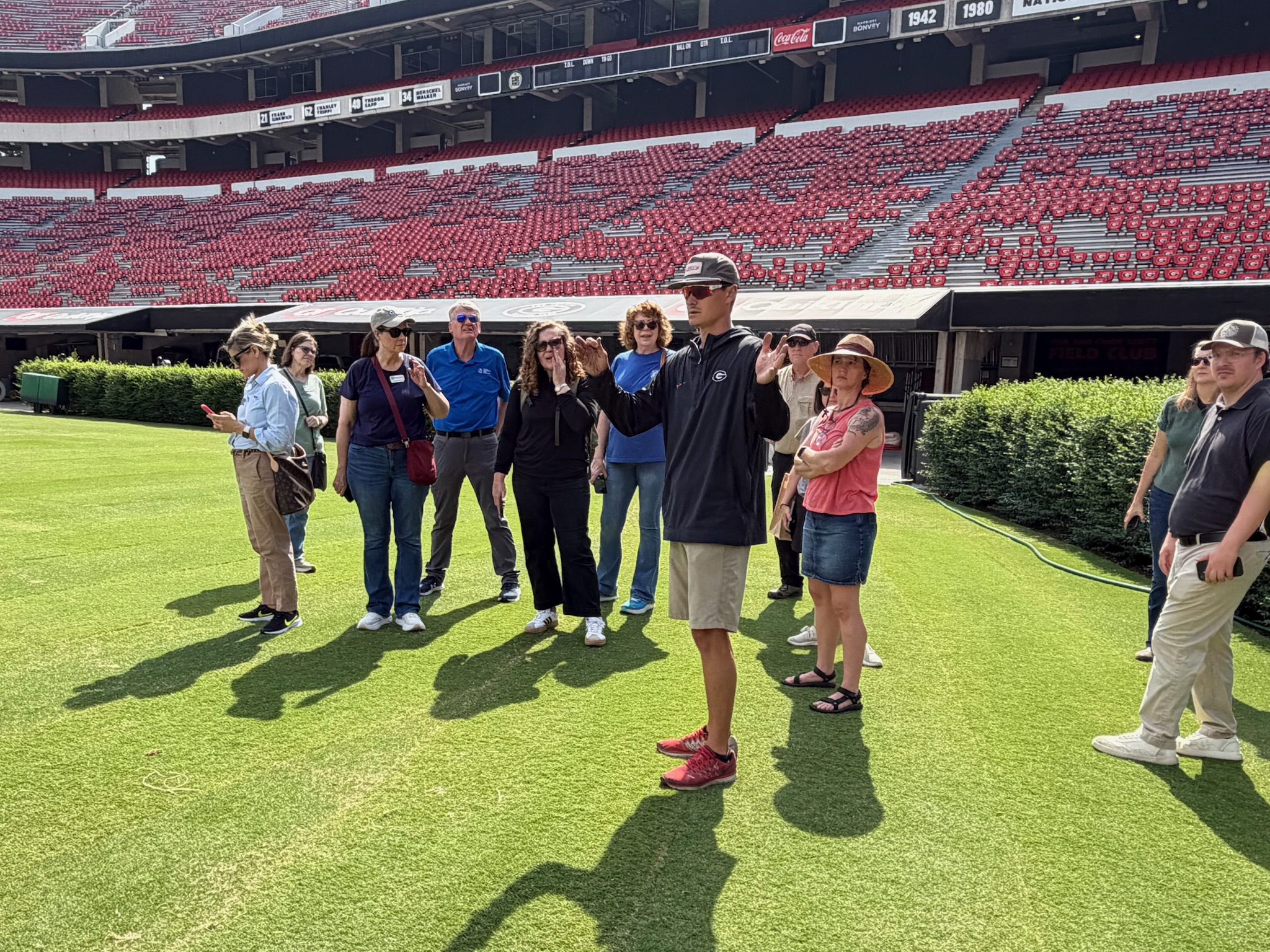
At the stadium, the group witnessed the grounds crew busily replacing the sod for the 2026 season. Head Football Coach Kirby Smart commands an elite program, and that includes high-quality turfgrass and excellent field staff. Dooley Field must meet the needs of the top-caliber teams that visit these hallowed grounds. The focus here was on turfgrass quality and management for a designed purpose: playing college football. Water conservation is not the focus of the field, but Ethan Kain, UGA Associate Director of Athletic Facilities, engaged in conversations on preferred turfgrass cultivars for sports fields and showcased the preparation and care required for the installation process. Failure is not an option.
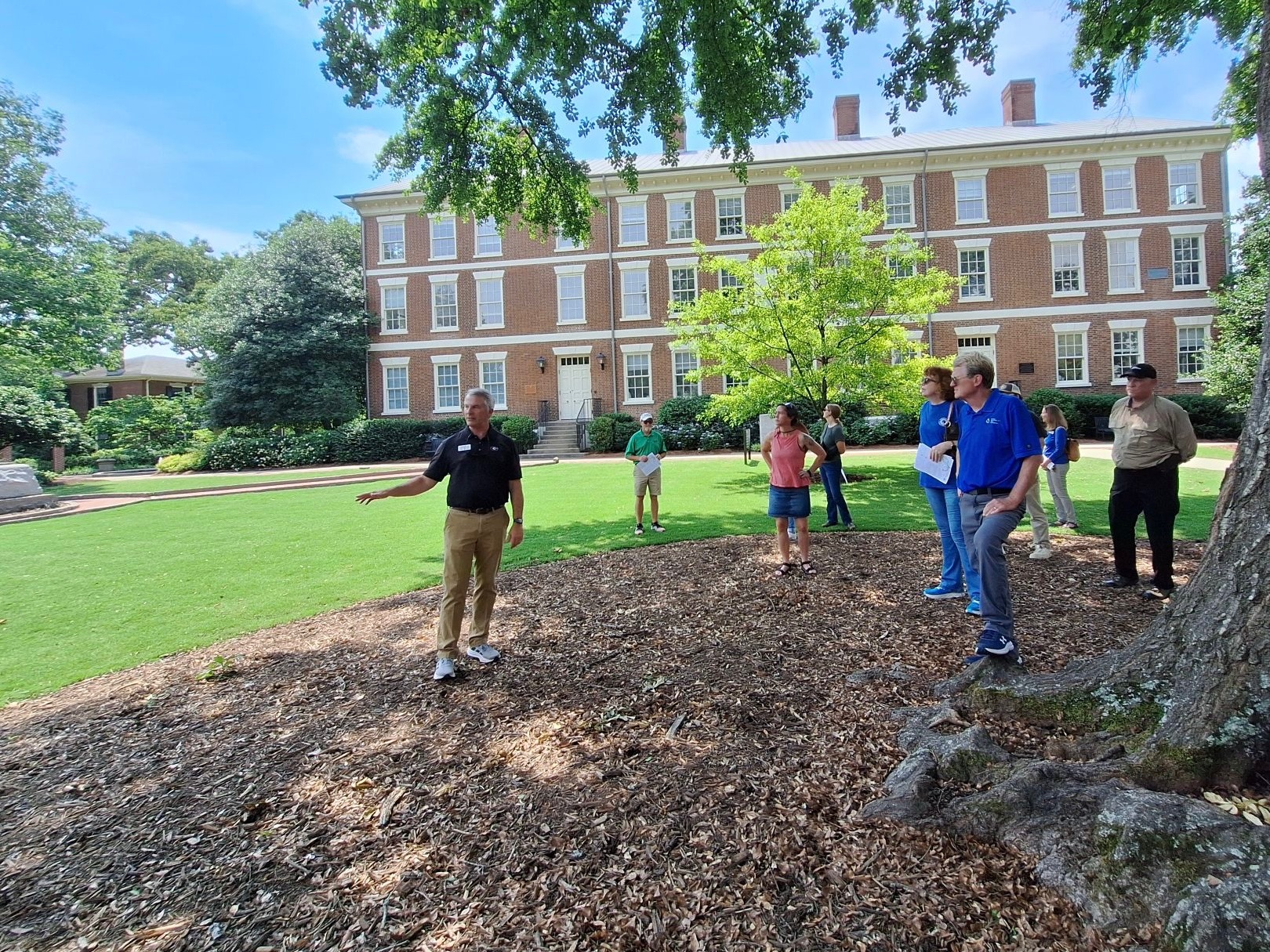

A walk through UGA’s North Campus to the Founders Memorial Garden
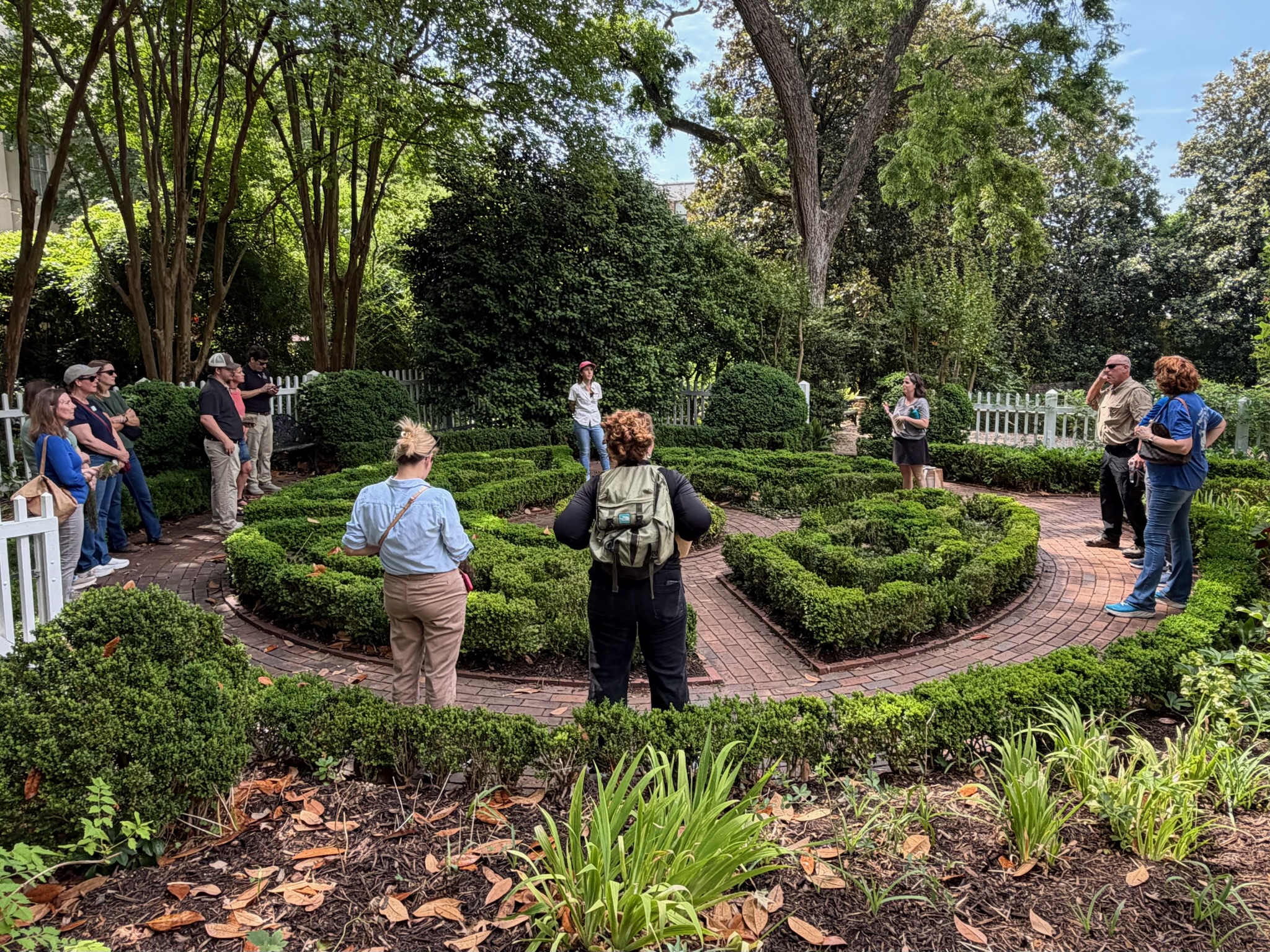
The stroll through the Founders Garden allowed us to discuss environmental impacts on landscape plants. Water use, shade impacts, disease pressures, and plant selection all factor into opportunities for success. Jackie Sherry, Athens-Clarke County Utilities Water Conservation Coordinator, and Dr. Laura Ney, UGA CAES Clarke County Agent, reviewed options for seasonal color, plant choices, water conservation, and “right plant, right place” messaging to maximize success through a program called H2GrOw. Native plants are important and have a prominent role in this program, and improved plant cultivars with drought-resistant qualities are also excellent choices for water-wise landscapes.
A look at established turfgrasses in use on the North Quad of the Athens campus
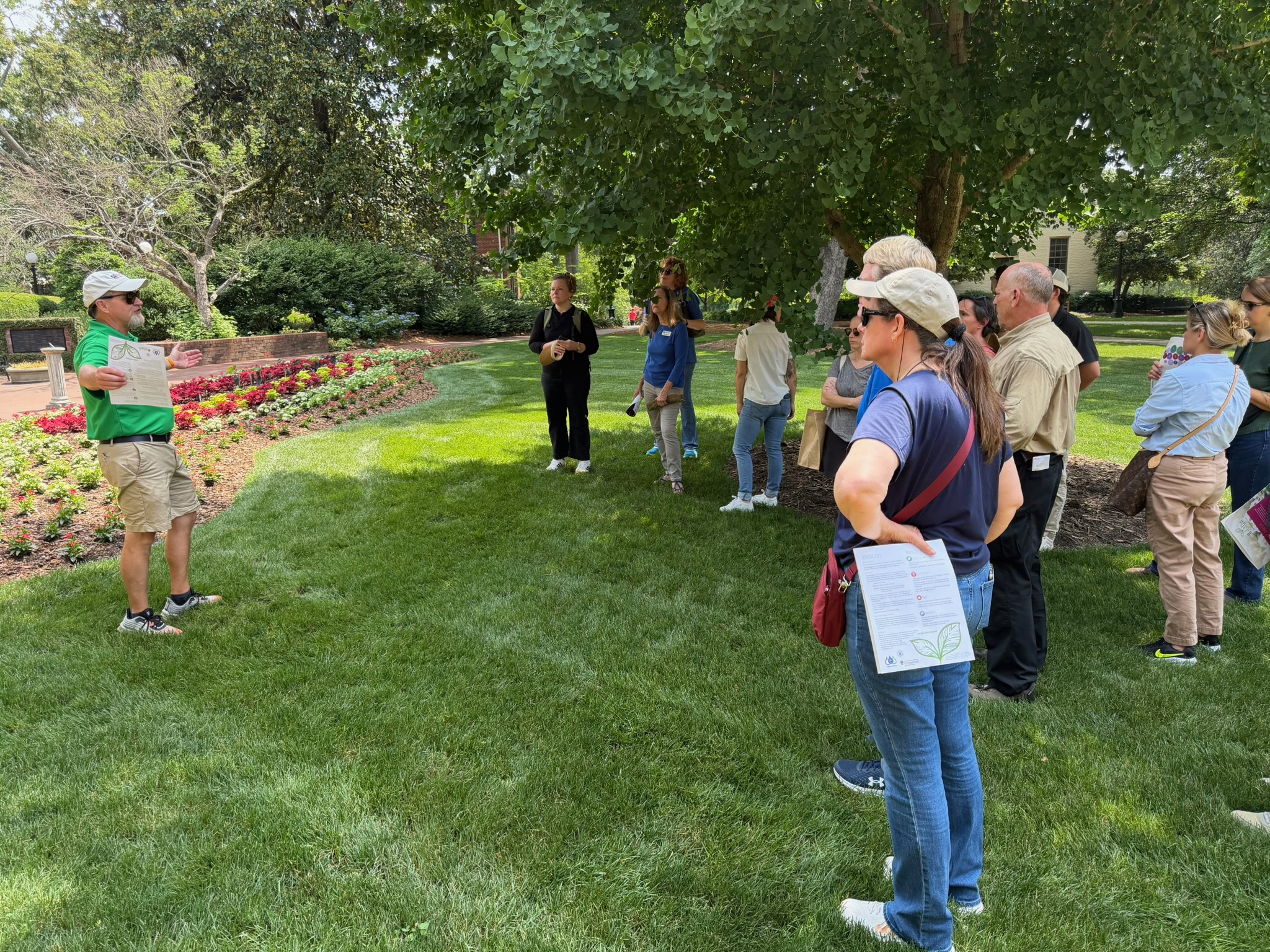
Dr. Clint Waltz, UGA Turfgrass Specialist, provided a close look at cool-season tall fescue, which performs well in heavily shaded areas but requires more water. He contrasted it with an adjacent area growing warm-season TifTuf bermudagrass, which thrives in sun and partial shade while requiring very little water to perform beautifully. While they are very different turf types, each performs as needed in the selected areas – again: right plant, right place.
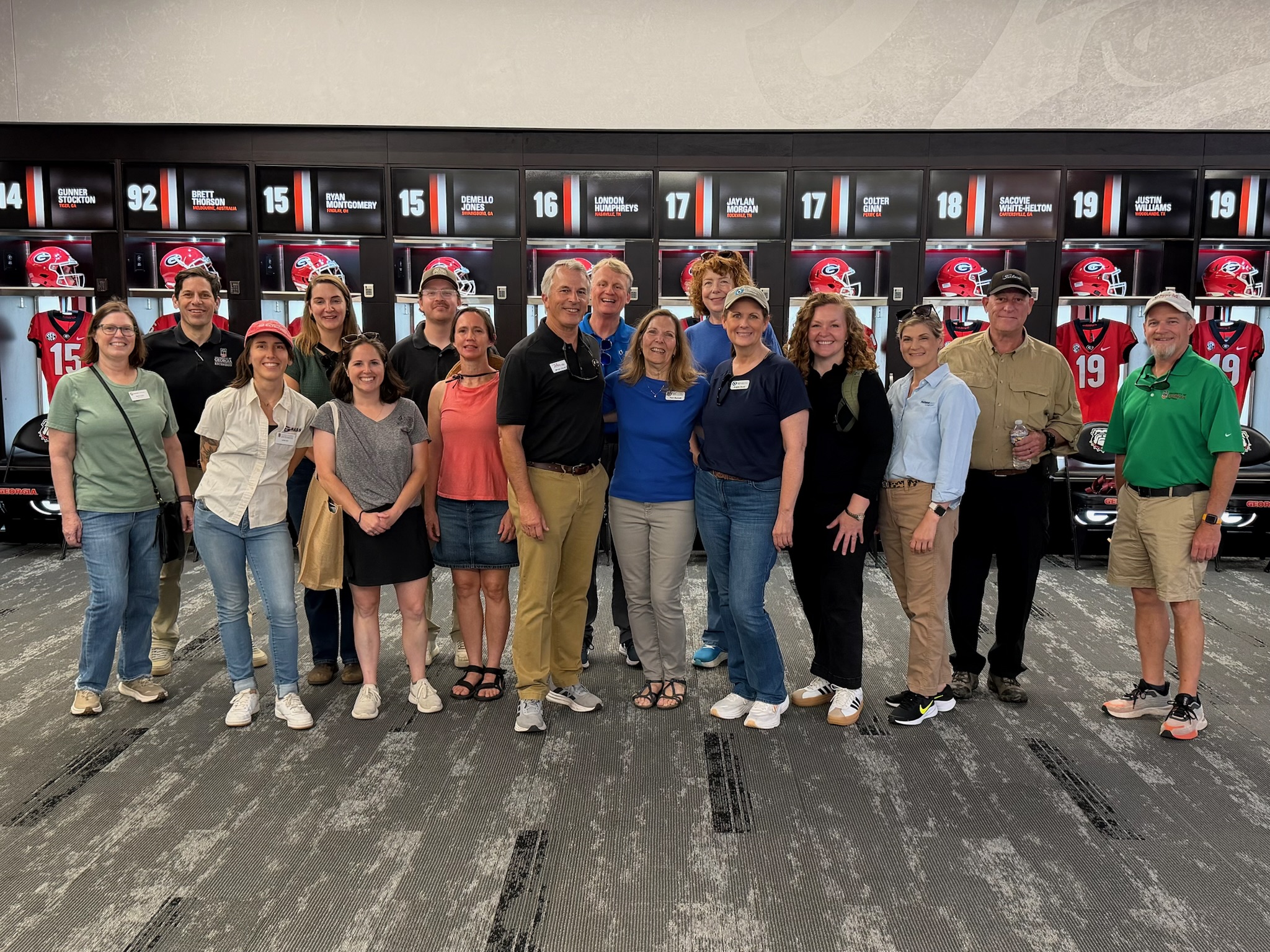
The unique Sanford Stadium experience was the hook that brought stakeholders together, but it was the expertise and passion of the group that made the trip and conversations worthwhile. UAC is thankful for these colleagues and partner organizations that are making water conservation solutions more sensible, diverse, and achievable.
We all have a role to play, whether it is with families on home lawns or players on a football field between the hedges. Working together, we can all be champions. Go Dawgs!
