In professional mowing, cutting height is not a one-time setup decision. It is something that often needs to change as conditions change, sometimes from site to site, sometimes within the same day.
Growth rates shift with temperature and rainfall. Turf density can vary across a property or from location to location. Presentation standards may differ between a sports field, a park, and a roadside contract. For operators managing multiple sites or large areas, the need to adapt is simply part of the job.
The problem is that traditional deck adjustments are rarely quick. In many cases, changing height means stopping the tractor, climbing down, manually adjusting the mower decks, and then getting back underway. It may not seem significant in isolation but repeated several times over a day; those interruptions add up. They break workflow, slow productivity, and introduce more opportunities for inconsistency.
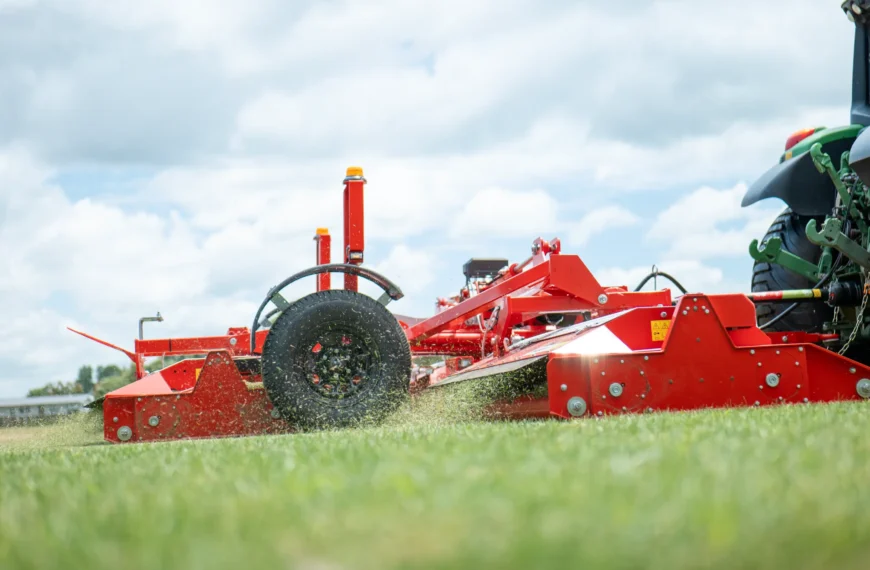
Meet the Trimax OptiAdjust
That is why a system like the Trimax OptiAdjust is worth paying attention to—not because it changes the fundamentals of mowing, but because it addresses one of the small, recurring friction points that operators deal with every day.
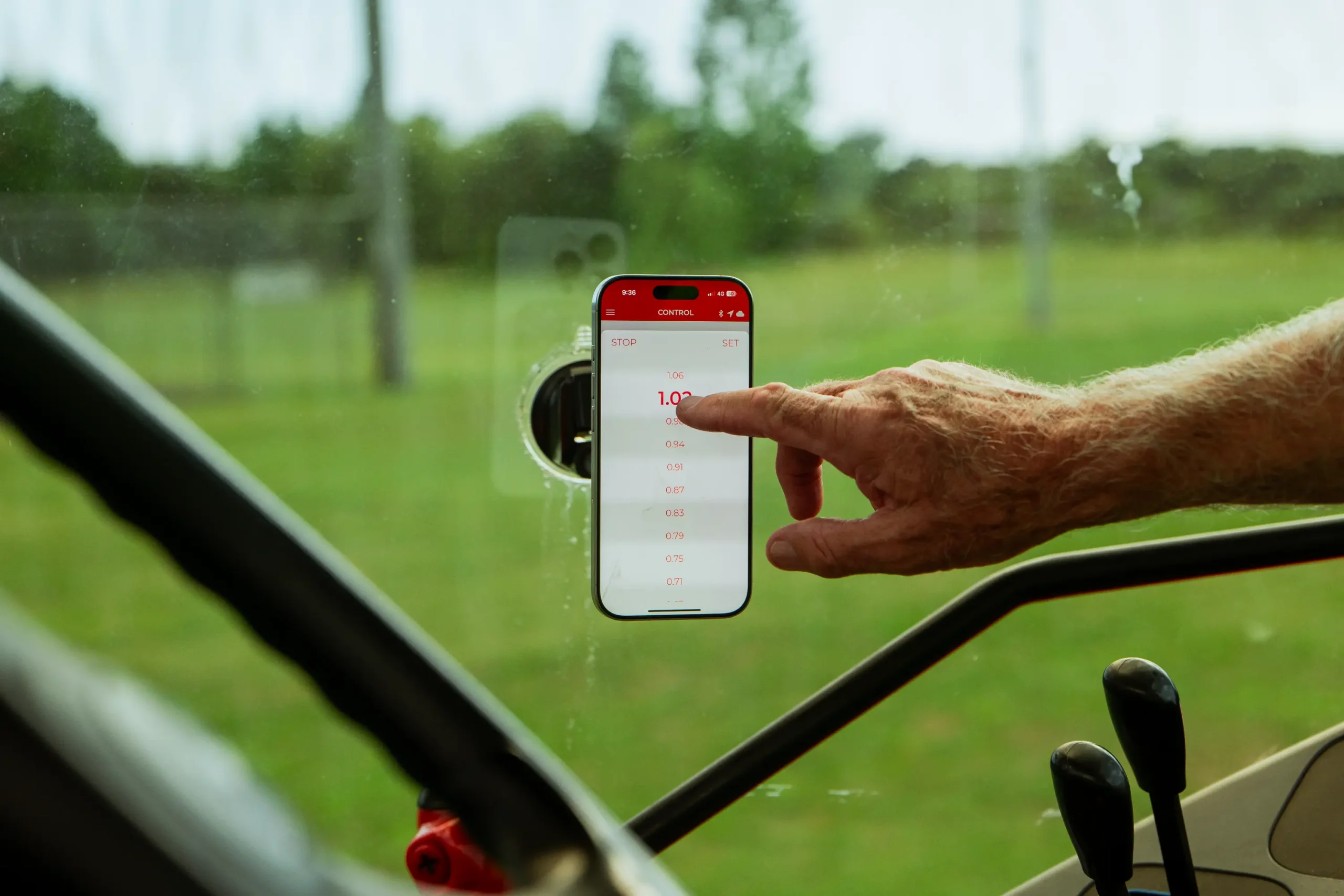
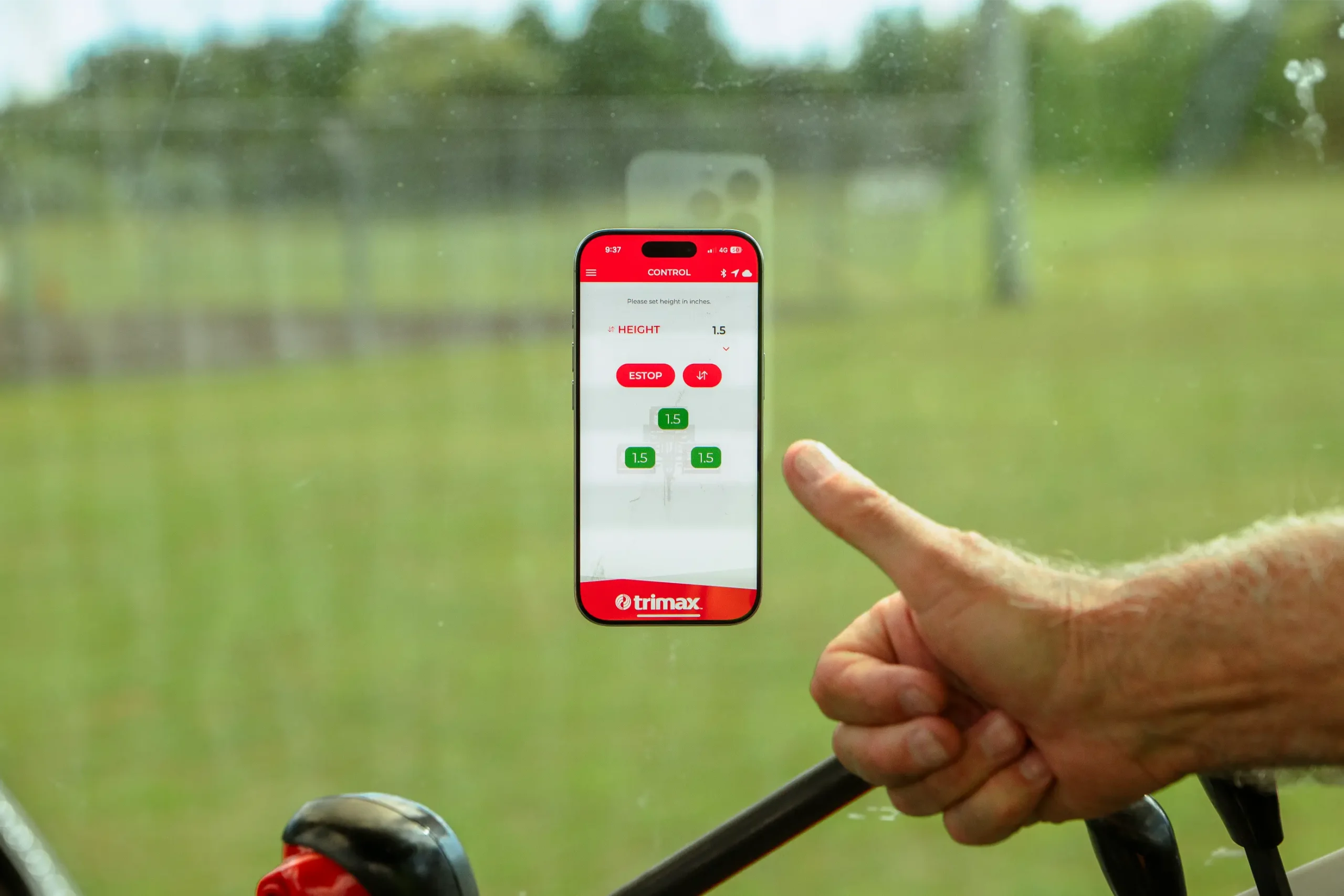
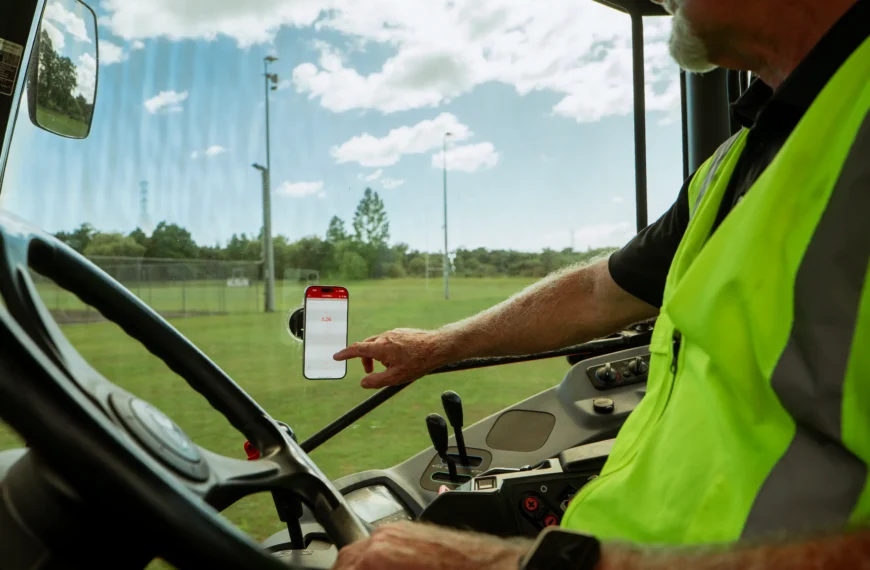
Available on the Pegasus S5, OptiAdjust allows cutting height changes to be made from the tractor cab through the Trimax Connect app, using a Bluetooth connection between the mower and a compatible mobile device. In simple terms, it gives operators a faster way to respond to changing conditions without stopping to make manual adjustments at the deck.
The real value of that capability is not just convenience. It is operational consistency.
Cutting height plays a major role in the final presentation of turf. When adjustments are easy to make, operators are more likely to respond when conditions call for it, rather than pushing on with a setting that is close enough. Over time, that can help improve the uniformity of the finish across varied ground and changing turf conditions.
There is also a turf management benefit. During periods of rapid growth, smaller and more frequent height adjustments can be preferable to larger corrections made too late. A more responsive approach can help reduce plant stress and support better surface quality over time. For managers responsible for sports fields, parks, reserves, and other high-visibility turf areas, that kind of control can have practical long-term value.
Just as importantly, repeatability matters. Manual adjustment always leaves room for variation, especially across busy crews or demanding schedules. A system designed to support more accurate and repeatable height changes can help reduce errors and make it easier to achieve a consistent standard, regardless of who is operating the machine.
That consistency also applies to the process itself. With both height adjustment and calibration handled through the app, crews can make changes more smoothly in the field and with less disruption to the job.
Built on the Pegasus S5 platform, it adds in-cab cutting height control to a mower already established in large-area professional mowing. Rather than redefining the job, it improves one of the routine tasks within it.
And that may be the most useful way to think about technology like this. In professional turf care, productivity is rarely won through one dramatic change. More often, it comes from removing small inefficiencies, improving repeatability, and making it easier for operators to maintain standards across a long working day.