When Growth Breaks Your Brand: The Hidden Risk of Outgrowing Your Identity
By:
By Kriston Sellier, President of id8
Many landscaping companies do not stall because demand disappears. Growth slows when the business evolves faster than the brand. A company that began as a small local operation may now manage multiple crews, commercial contracts, and specialized services such as irrigation, lighting, or design-build. Some expand into new markets. Others acquire smaller operators as part of a regional growth strategy.
The business changes. The brand often does not.
This disconnect is what we call the brand evolution gap.
A brand evolution gap occurs when your company’s capabilities and market position move forward while the brand still reflects an earlier stage of the business. Customers, employees, and partners struggle to understand what your company stands for. The market receives mixed signals about who you are and what you do best.
When Landscaping Companies Are Most at Risk
This type of disconnect most often appears during periods of growth or strategic transition. Those moments are common in the landscaping industry and typically occur when a business moves from one stage of development to another.
Examples include:
- Moving from residential maintenance into commercial property contracts
- Expanding from basic maintenance into services such as irrigation, lighting, hardscapes, or design-build
- Growing from an owner-operator model into a multi-crew organization with account managers and sales staff
- Expanding into additional markets or service areas
- Acquiring smaller operators as part of a regional growth strategy
Each milestone represents meaningful progress. Each also increases the likelihood that the market still views the company through the lens of its earlier stage. Without deliberate attention, perception begins to lag behind reality.
Warning Signs Your Brand Has Fallen Behind
How can you tell when your brand no longer reflects the business you have built? The signals often appear in everyday interactions with customers, employees, and prospects.
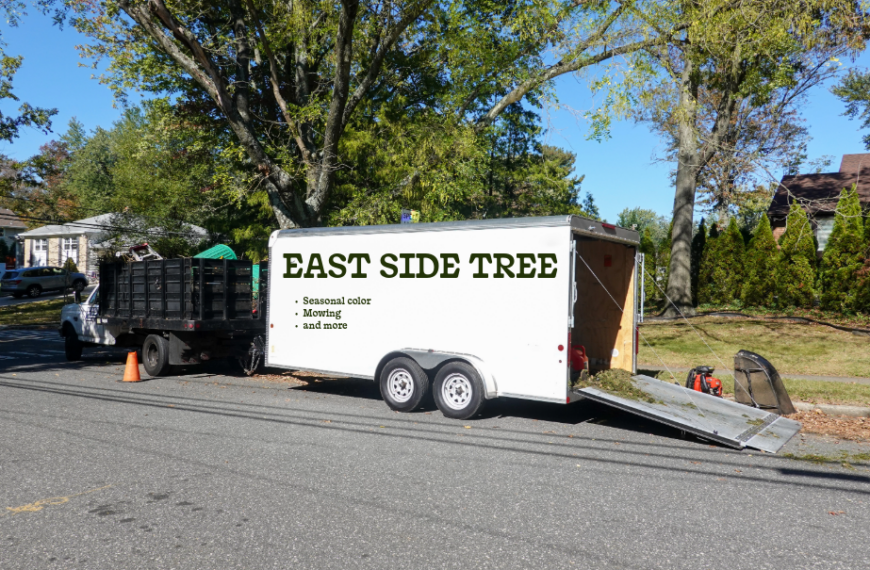
Confused? Your customers might be, too. Do you still offer all these services? Don't risk attracting the wrong clients to your business.
Examples include:
- Trucks that advertise residential mowing even though most revenue now comes from commercial contracts
- Sales representatives describing the company differently depending on who is presenting
- New employees struggling to explain what makes the company different from competitors
- Customers assuming the company provides maintenance only, despite expanded services such as design-build
- A website that highlights outdated projects rather than the work you want to win today
Individually, these issues may seem minor. Taken together, they signal that the market is still seeing an earlier version of your company.
What Are the Risks?
The consequences of a brand disconnect rarely appear overnight. The impact usually develops gradually as the market struggles to understand where your company fits.
Clients reviewing proposals may underestimate the scale or sophistication of your services. Prospective customers may overlook capabilities you now offer because they are not clearly communicated. Internally, sales conversations may vary widely because no clear positioning guides the message.
In competitive bidding environments, perception matters. Property managers and decision-makers often rely on quick signals such as brand presentation, project portfolio, and company positioning when deciding which contractors make the shortlist.
When this happens, the market fills in the gaps on its own. The perception that forms may no longer reflect the business you have built.
How to Close the Brand Evolution Gap
Closing the gap requires more than updating a logo or redesigning a website. The objective is to align how the market sees your company with the business you are building.
Start with a brand audit.
Evaluate how your brand appears across trucks, uniforms, proposals, recruiting materials, and your website. Gather feedback from customers, property managers, employees, and prospects. These conversations often reveal where the brand and the business have drifted apart.
Define your positioning.
Clarify what you want your company to be known for going forward. The focus may be commercial property maintenance, HOA management, or design-build expertise. Clear
positioning helps your team communicate a consistent message about why clients should choose you.
Align your team.
Employees should understand the company’s direction and value proposition. Consistency across sales staff, managers, and crews strengthens the signal your brand sends to the market.
Relaunch with intention.
Update your website, project portfolio, marketing materials, and customer communications so they accurately represent the work you want to win in the future.
Keep Your Brand Moving Forward
Growth inevitably changes a landscaping business. Services expand. Clients evolve. Projects increase in scale and complexity.
Your brand should evolve alongside those changes.
A brand that reflects the current state of the business clarifies what your company does best and strengthens credibility with customers, employees, and partners. A brand that remains stuck in the past creates confusion and slows momentum.
Evaluating your brand is not simply a marketing exercise. It is a business decision that influences the contracts you win, the employees you attract, and how the market understands your company.
A clear and current brand ensures that the company you have become is the company the market actually sees.