Are you PRE-pared for PRE-emergent Summer Annual Weed Control? Crabgrass is here!
By:
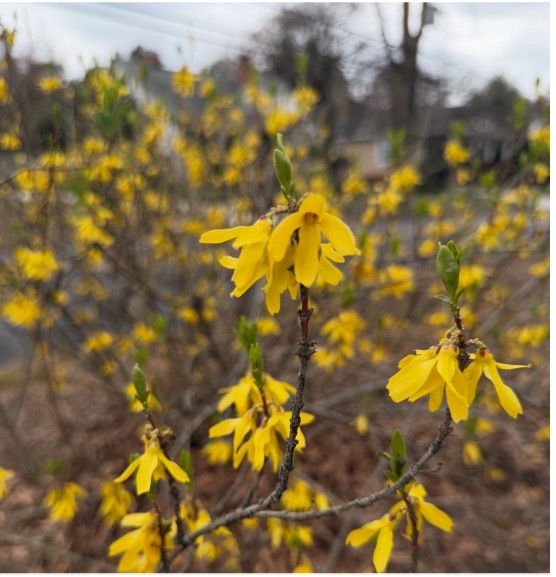
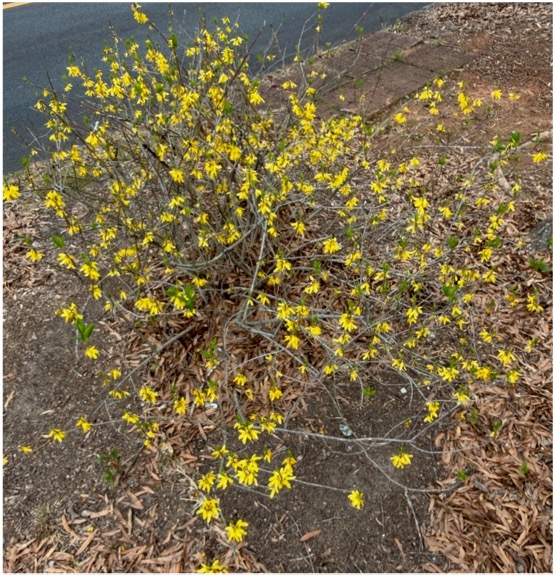
Forsythias are in bloom in Griffin, GA (Figure 1), and that means crabgrass (Digitaria spp.) control season is here, and other summer annual weeds such as goosegrass (Eleusine indica) and prostrate spurge (Euphorbia maculata) are not far behind.
Summer annual weeds like crabgrass, goosegrass, and prostrate spurge don’t sneak in overnight; they build all spring under the surface. By the time they’re visible, you’re already behind. Preemergent (PRE) herbicides remain one of the most reliable tools for preventing these weeds in turfgrass systems, but they only work when timing, product selection, and application technique are dialed in.
Key Weed Identification, Biology, and Pressure Points
Understanding the biology of weeds help you use preemergent herbicides more effectively.

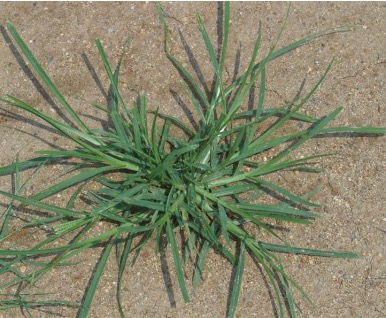
Crabgrass - Digitaria spp. (Figure 2)
- Germination begins in spring when soil temperatures at 2 inches reach 55°F for four consecutive days.
- Favors thin, open turf, compacted soils, and areas near pavement.
- Produces large numbers of seeds that persist in the seedbank.
Goosegrass - Eleusine indica (Figure 3)
- Identification characterisitcs include bunch-type growth habit, hears along sheath and ligule, flattened sheath, and distinct zipper-like seed heads.
- Starts germinating when 2-inch soil temperatures reach 60-65°F, is often equated to approximately a month after crabgrass germination starts.
- Prefers compacted, heavily trafficked areas.
- Tolerant of low mowing heights.
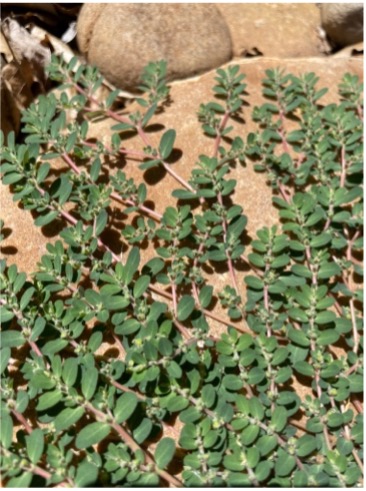
Prostrate spurge - Euphorbia maculata (Figure 4)
- Identification characteristics are reddish stolon, milky white sap when breaking open the stems, small oppositely arranged leaves, central taproot, and prostrate growth habit.
- Starts germinating when 2-inch soil temperatures average 60°F, and thrives in thin, dry, compacted sites.
- Forms low, mat-like patches that exploit any bare areas in the canopy.
Because germination timing and preferred environments differ slightly, preemergent programs must be strong and long enough to cover the entire spring-to-summer window, particularly in climates we experience here in Georgia.
Timing: When to Apply Preemergent Herbicides
The most common reason preemergent programs fail is poor timing and/or insufficient activation. To achieve season-long control of these problematic summer annual weeds and others, you will need to apply sequential PRE applications for best results. Applying once early on, prior to crabgrass germination, and then subsequently 2-3 months later to ensure a residual herbicide barrier in the top ½ inch of the soil profile is key.
General timing guidelines:
- Crabgrass: First application when soil temperatures at 2 inches approach 50–55°F. We are already past this in several areas of the state as of February 25th, 2026.
- Goosegrass and spurge: Ensure residual is still active as soils warm into the mid-60s–70s°F, often requiring either a slightly later initial timing, a split application, or a long-residual product.
Practical timing cues:
- Forsythia shrubs blooming is often used as a rough indicator for crabgrass germination.
- In warm-season regions, many managers target late winter to very early spring, before rapid green-up, but be sure to read the label to ensure applications during dormancy of warm-season grasses will not delay green-up.
Whatever the indicator, do not rely solely on the calendar date. Local soil temperature data (from on-site probes, local weather networks, or university extension) and recent weather patterns are more reliable.
Soil temperature data at 2-inch depths from across the state this year through February 25th, 2026.
| Location | Current 4-day average soil temps °F [2 inches] as of Feb. 25th, 2026 | First 4-day average where 55 °F was reached |
| Sandy Springs | 44.9 | February 21st |
| Griffin | 50.7 | February 20th |
| Savannah | 56.9 | February 12th |
| Blairsville | 45.5 | February 21st |
| Tifton | 57.2 | February 13th |
| Soil temps across GA at 2-inch depth as of February 25th, 2026 from georgiaweather.net. | ||
Preemergent Product Selections & Notes
| Trade name (active ingredient) | Formulation | Tolerant Turfgrasses | Application Notes |
| Pre-emergent herbicides | |||
| Bensumec (bensulide) |
4LF | Zoysiagrass, bermudagrass, centipedegrass, St. Augustine, tall fescue, Kentucky bluegrass | Irrigate directly after application with ½ to 1 inch of water. |
| Dimension
(dithiopyr) |
2EW, others | Bermudagrass, zoysiagrass, centipedegrass, seashore paspalum, St. Augustinegrass, tall fescue, Kentucky bluegrass | Requires ½ inch of irrigation for optimal herbicide activation in soil. |
| Freehand
(dimethenmid-p + pendimethalin) |
1.75G | Seashore paspalum, bermudagrass, zoysiagrass, centipedegrass, St. Augustinegrass, | ½ inch of water after application to activate. |
| Sureguard
(flumioxazin) |
4SC | Dormant bermudagrass ONLY | Moisture is required for activation to work (½ inch). |
| Specticle Flo
(indazliflam) |
0.622SC | Bermudagrass, zoysiagrass, seashore paspalum, St. Augustinegrass, centipedegrass | Moisture is required to activate, rainfall within a few days after application will suffice. |
| Pendulum Aquacap
(pendimethalin) |
3.8L, others | Bermudagrass, zoysiagrass, tall fescue, Kentucky bluegrass, centipedegrass, St. Augustinegrass, seashore paspalum | Efficacy will be improved with ½ inch of rainfall or irrigation post application (within < 30 days) |
| Barricade
(prodiamine) |
65WG, others | Bermudagrass, zoysiagrass, centipedegrass, tall fescue, Kentucky bluegrass, seashore paspalum, St. Augustinegrass | ½ inch of moisture is needed for optimal activation within 7-14 days post application. |
| Echelon
(prodiamine + sulfentrazone) |
4SC | Bermudagrass, zoysiagrass, centipedegrass, St. Augustinegrass, tall fescue, Kentucky bluegrass, seashore paspalum | Potential for injury on zoysiagrass during spring transition periods. |
| Numerous alternative formulations (not listed) or combination products (not listed) combining multiple active ingredients can also provide good to excellent preemergence control of crabgrass. | |||
Post-emergent (POST) Control of Breakthroughs
Even strong preemergent programs can have some breakthroughs, especially in high-pressure or extended growing seasons.
When you see escapes:
- Identify the weed and growth stage. Smaller plants are much more manageable than mature plants and, in some cases, might be the only growth stage where you will have labeled herbicides that will provide control and not suppression.
- Use labeled POST herbicides (e.g., quinclorac, fenoxaprop, topramezone, foramsulfuron, etc., depending on turf species and target).
- For prostrate spurge, many selective POST broadleaf herbicides are available and safe for application on turfgrasses found in Georgia.
Repeated late-season escapes in the same locations can indicate:
- Worn, thin turf.
- Compacted or drought-prone spots.
- PRE timing, rate, or activation issues.
Addressing those underlying factors can improve success if herbicide programs are seemingly failing.
Final Notes
- Crabgrass, goosegrass, and prostrate spurge are best controlled before they emerge. If you are applying pre-emergent herbicides after plants are germinating, be sure to apply a PRE + POST to control both existing plants that have germinated at a vulnerable stage, as well as prevent further germination.
- Apply more than one PRE herbicide in a program to stop weed prior to them becoming a problem.
- Use soil temperature and local conditions, not just the calendar, to time PRE herbicide applications.
- Select products that provide adequate residual and spectrum for your target weeds and turf species.
- Ensure uniform application and timely activation with rainfall or irrigation.
- Pair pre-emergent programs with sound cultural practices to maintain dense, competitive turf and reduce long-term weed pressure.
- As always read the label as the label is the law!
With a well-planned pre-emergent program, summer annual weeds are way less likely to be an eyesore come Memorial Day, allowing for the enjoyment of those managed turfgrass areas all spring and summer long!
Benjamin Pritchard, Ph.D.
Assistant Professor – Turfgrass Weed Scientist
University of Georgia